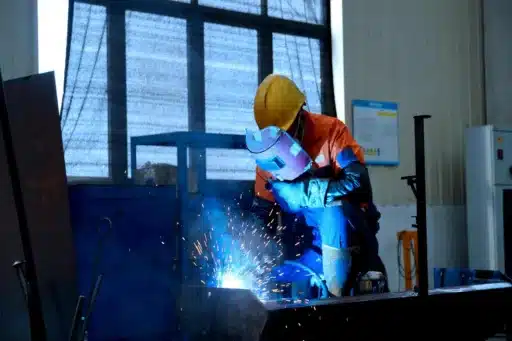
The Best Weld Cleaner for Food-Grade Stainless Steel
16 September 2026
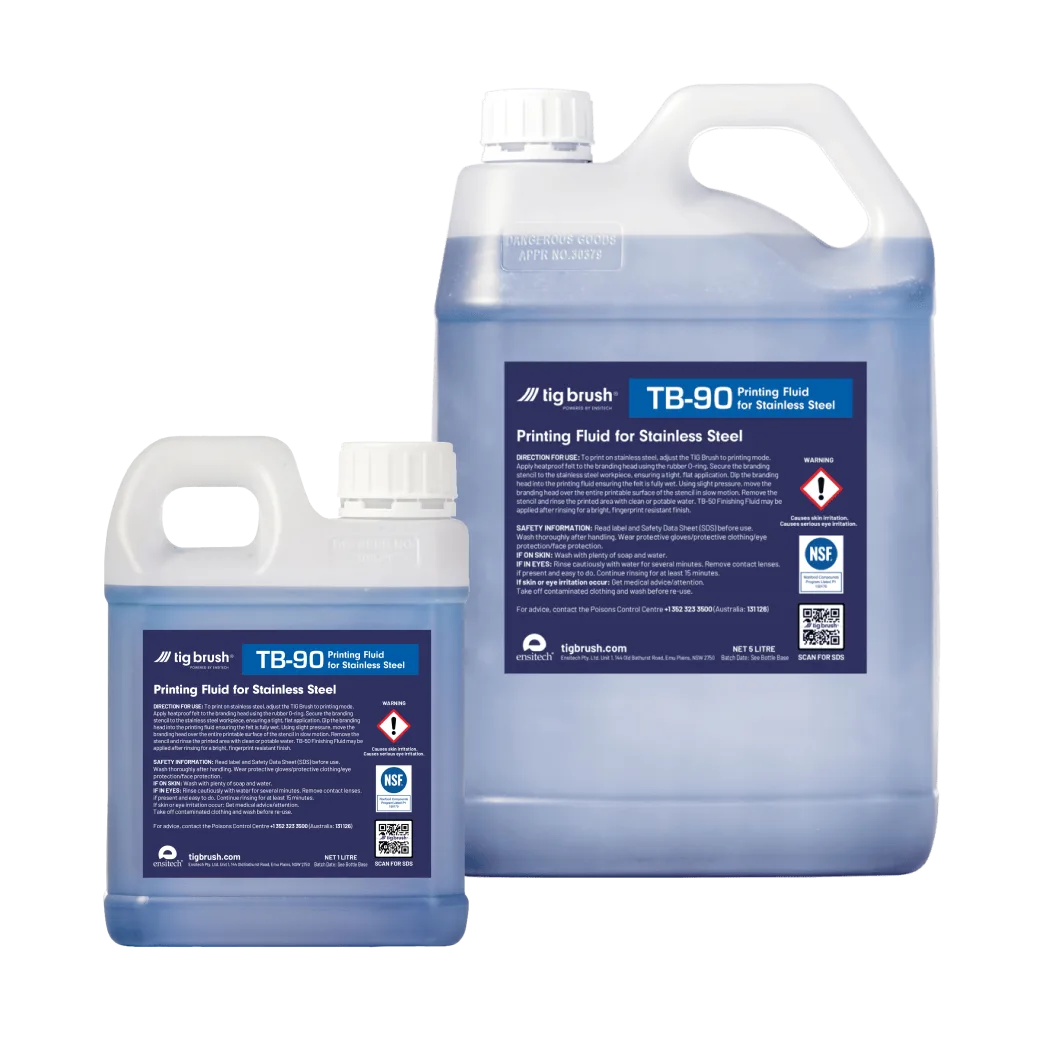
A single rough weld can undo months of food safety compliance work. Heat tint, oxide scale, and leftover contamination sit right where bacteria like to grow, and no amount of downstream cleaning fixes a weld that was never properly finished. If you manufacture or maintain equipment for food and beverage production, picking the right weld cleaner for the food industry is not just a finishing step. It is part of your hygiene program.
This guide walks through what actually makes a weld cleaner suitable for food-grade stainless steel, and how TIG Brush fits into that picture.
Key points
- Food-grade weld cleaning needs NSF-certified fluids, not general industrial chemicals.
- Electrochemical cleaning removes heat tint without abrasive residue or harsh pickling paste.
- Proper cleaning restores the passive layer that gives stainless steel its corrosion resistance.
- Portable, brush-based systems fit into working production lines without long downtime.
- The right machine depends on your weld volume and the thickness of the stainless steel you work with.
Why Weld Cleaning Is Part of Food Safety, Not Just Finishing
Every weld on stainless steel leaves heat tint behind. That discoloured band is chromium oxide, and it strips away the thin, invisible layer that makes stainless steel resistant to corrosion and easy to sanitise. Left untreated, heat tint gives bacteria a foothold and leaves the metal more vulnerable to rust and pitting over time.
For equipment that touches food, drink, or packaging lines, that is not a cosmetic issue. It is a compliance issue. Passivation, the process of restoring that protective layer after welding, needs to happen consistently and needs to hold up under regular washdown and sanitising cycles.
What Makes a Weld Cleaner Food-Grade Compliant
Not every weld cleaning method suits a food production environment. A handful of factors separate a genuinely food-grade solution from something that simply removes the heat tint.
NSF-Certified Fluids
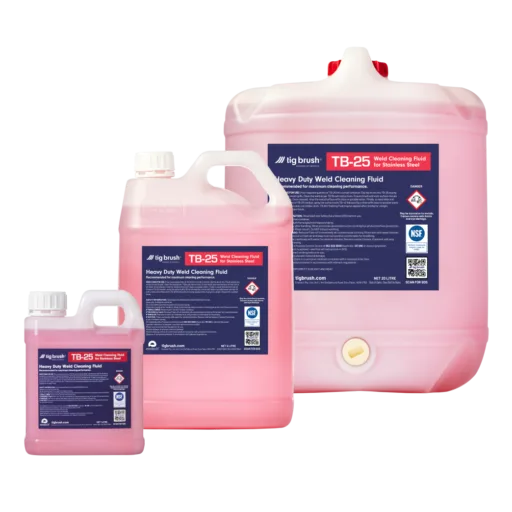
Any fluid used near food-contact surfaces needs to meet recognised hygiene standards. TIG Brush fluids are NSF certified, which means they have been independently assessed as suitable for food and beverage settings. That certification matters more than the marketing copy around a product; it is the difference between a fluid you can defend to an auditor and one you cannot. You can see the full range of NSF-certified weld cleaning fluids built for this exact purpose.
No Abrasive Residue or Harsh Pickling Paste
Mechanical grinding leaves metal dust behind, and pickling paste relies on strong acids that need careful handling and thorough rinsing. Both introduce risk into a food-grade workflow. Electrochemical weld cleaning works differently. A low-voltage current and a targeted fluid lift the heat tint at the weld itself, without abrasive particles or leftover acid residue to manage.
Passivation That Meets ASTM Standards
Cleaning is only half the job. The stainless surface also needs passivating back to a state that meets ASTM A967 requirements. TIG Brush systems have been independently tested by The Welding Institute, with corrosion resistance results that matched or beat unwelded steel. That is the kind of proof a quality manager can put in front of an auditor.
What FDA-Regulated Food Facilities Use
Facilities that produce or handle food fall under FDA rules on equipment and surfaces that contact food, which is a different thing to a weld cleaner itself being FDA approved. There is no such approval for weld cleaning equipment. What these facilities actually look for is NSF certification on any fluid or chemical used near food-contact surfaces, since that is the recognised way to demonstrate a product meets food industry hygiene standards.
This is why TIG Brush fluids are built to be NSF certified from the start. Facilities operating under FDA oversight can use TIG Brush systems knowing the fluids have already cleared that bar, rather than needing to justify an uncertified chemical to their own compliance team.
How Sanitary Weld Cleaning Works on the Shop Floor
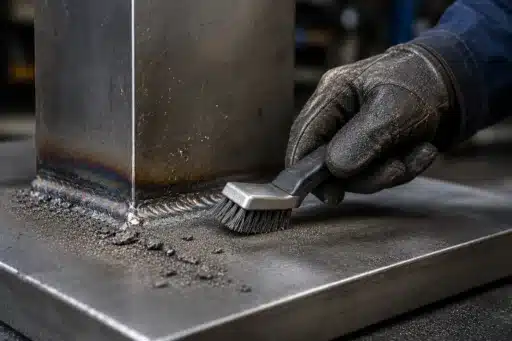
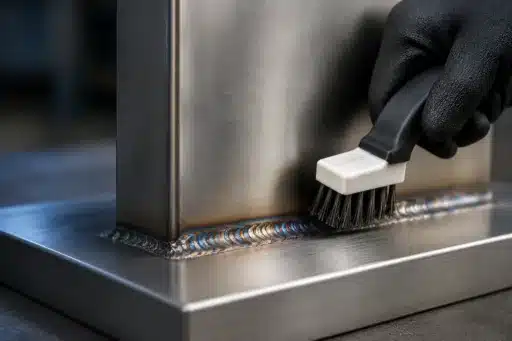
TIG Brush uses a simple three-step process: apply the cleaning fluid with the brush wand, let the current do the work at the weld seam, then neutralise and rinse. Because the reaction stays localised to the weld, the surrounding surface is not disturbed, and there is no dust cloud or fume extraction setup to plan around.
This matters for food and beverage manufacturers because production lines rarely have time for lengthy stoppages. Ensitech customers across food and beverage, packaging, and FMCG production already rely on this process to keep lines compliant without pulling equipment offline for extended periods. If you want to see how this applies across a wider range of food and beverage stainless steel applications, our industry page breaks down more use cases.
Choosing the Right TIG Brush for Your Line
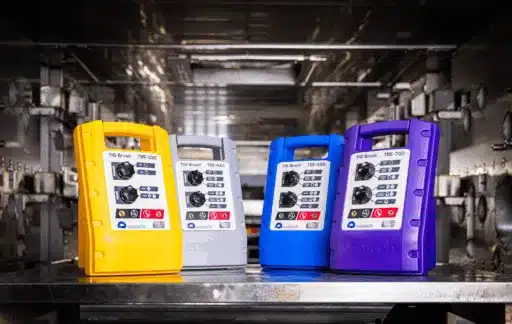
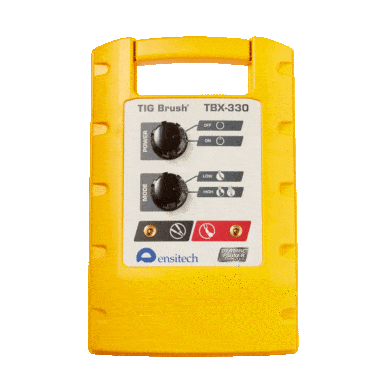
The TIG Brush range is built around output and duty cycle:
- The 330 Weld Cleaner suits occasional welders or smaller fabrication jobs where volume is low.
- The 440 fits small to medium shops running regular but moderate cleaning loads.
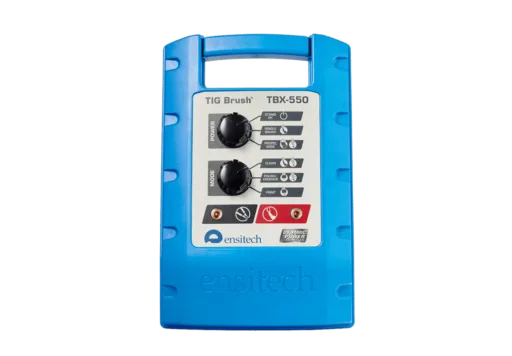
- The 550 Weld Cleaner handles heavier stainless and tougher welds where reliability under daily use matters.
- The 700 Weld Cleaner is built for high-volume production, cleaning, passivating, and electropolishing in a single fast pass.
A Simple Next Step
Food-grade compliance is not something to guess at. If you would like to see how electrochemical weld cleaning performs on your own stainless steel, request a demo, and we will walk through the process on parts that reflect your actual production line.
Frequently Asked Questions
1. What makes a weld cleaner suitable for food-grade stainless steel?
A food-grade weld cleaner needs to use NSF-certified fluids, avoid abrasive residue, and restore the passive layer on the stainless surface. TIG Brush systems are built around all three requirements, using electrochemical cleaning instead of grinding or pickling paste.
2. Is NSF certification required for weld cleaning fluids in food production?
NSF certification is not always a legal requirement, but it is the clearest way to demonstrate that a fluid is suitable for use near food-contact surfaces. TIG Brush fluids carry this certification, which gives quality teams a straightforward answer during audits.
3. How is sanitary weld cleaning different from standard weld cleaning?
Sanitary weld cleaning holds the surface to a higher standard because bacterial growth and corrosion resistance are on the line, not just appearance. The process still removes heat tint and oxide, but the fluids, equipment, and passivation results need to meet stricter benchmarks like ASTM A967.
4. Does TIG Brush work across different welding processes used in food equipment?
Yes. TIG Brush handles TIG, MIG, MAG, Sub Arc, stick, and laser welds, which covers most of the fabrication methods used for food and beverage equipment and pipework.
5. How do I know which TIG Brush model is right for my facility?
It comes down to your weld volume, the thickness of the stainless steel, and how many operators will run the machine. A quick call with our team, or a live demonstration, is the fastest way to match a model to your production line.