TIG Brush 700 Review: Is It the Best Weld Cleaner for Fabrication Professionals?
23 September 2026
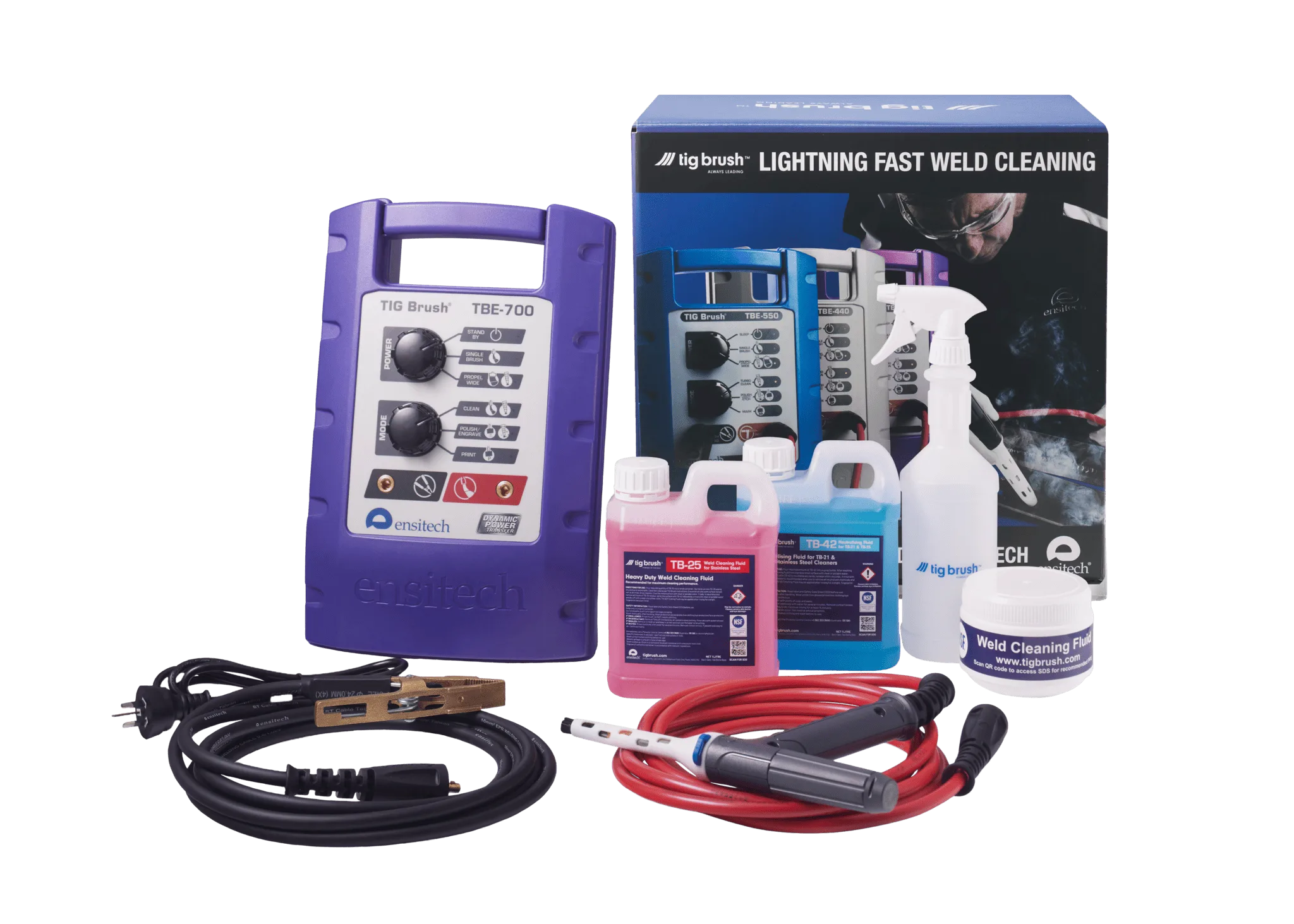
Every stainless steel weld leaves a mark once the torch is put down. Heat tint, oxidation, and discoloration are the parts of the job nobody enjoys cleaning up. For years the answer was pickling paste, a wire brush, or time you didn’t really have. We built the TIG Brush 700 for a faster, safer finish, and after years in shops across food and beverage, automotive, and general fabrication, it holds up as one of the most capable weld cleaners you’ll find.
Key Points
- Cleans, passivates, electropolishes, and brands stainless steel welds in one portable system.
- Runs at 100 amps with a true 100% duty cycle and no forced cooldown.
- Patented Dynamic Power Transfer keeps current stable as the brush wears down.
- Works across TIG, MIG, MAG, Sub Arc, stick, and laser welds.
- Built for heavy, high-volume fabrication work rather than light occasional use.
What This Machine Actually Does
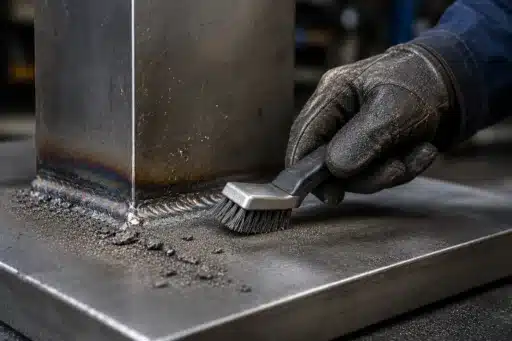
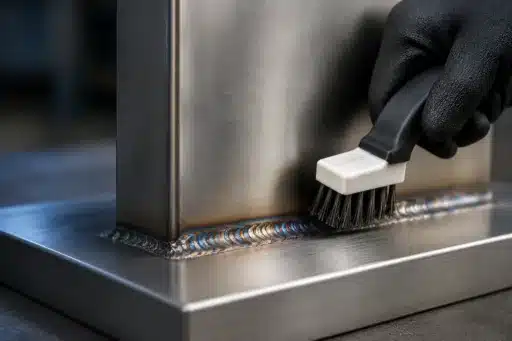
At its core, this is an electrochemical weld cleaner. It uses a low-voltage current, a conductive brush, and matched fluids to lift heat tint and oxidation, restore passivation, and, if you need it, electropolish or brand the surface, all from one unit.
Two numbers matter most on the shop floor: 100 amps of maximum current, and a true 100% duty cycle. Some weld cleaners use lower-grade components that need periodic rest to avoid overheating. This one doesn’t, so you can run it through a full shift when clearing a backlog. It’s also IP64 rated, so dust and fluid on a busy bench won’t take it out of action.
Speed and Performance on the Shop Floor
We built this machine to move at more than twice the speed of its closest competitor, and that comes down to a technology we call Dynamic Power Transfer. As the brush wears, its resistance naturally drops, which can make current control unpredictable on lesser machines. Dynamic Power Transfer adjusts output in real time so current stays consistent regardless of brush wear, meaning fewer passes and less guessing about performance.
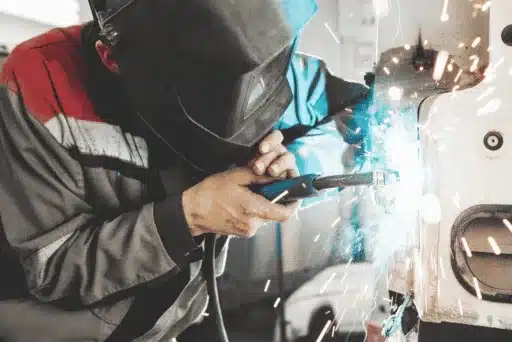
It also handles TIG, MIG, MAG, Sub Arc, stick, and laser welds, not just one process, which matters for shops running mixed production lines.
Build Quality and Everyday Usability
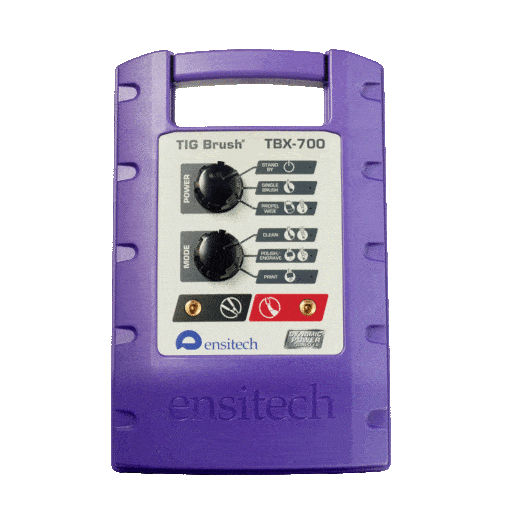
It ships as a Slimline Torch Kit built around Push-In Brush technology. The brushes seat with fine tolerances, so they resist corrosion and seizing far better than older clip-style designs, and swapping one out takes seconds. A low center of gravity and bottom-weighted chassis keep the unit stable, and the controls are simple enough for new operators to pick up quickly. Cleaning a weld comes down to three steps: apply fluid, brush, neutralize.
Where It Fits: Who This Machine Is For
This is our flagship for a reason. It’s built for high-volume fabrication shops, OEM production lines, and industries like food, beverage, and automotive manufacturing where finish quality and safety aren’t negotiable. Our system fluids meet requirements set by NSF International, the body responsible for food equipment safety standards, so the speed and consistency you get here doesn’t come at the cost of hygiene compliance. If your shop runs mixed welding processes across a full shift, this is the machine we’d point you to. If your volume is lighter, one of our smaller models may suit your budget better. We’d rather you buy the right machine than the biggest one.
What Fabricators Are Saying
Robert Doroshow, a mechanical engineer at NWL Inc., told us it saved production time and gave his team a better finish on their welds. Scott Riley, Vice President of Biltrite Sign Service, said what surprised him most was how easy it was to use and how quickly it worked. These are the kind of comments we hear from shops that switch.
Is It the Best Weld Cleaner for You?
If you’re running a heavy-duty, high-throughput operation across multiple welding processes, this machine is built for that job. For lighter use, it’s worth weighing up the features that matter most in a weld cleaner before choosing which model fits your shop. The best way to know for certain is to see it clean your own welds, so request a demo, and we’ll show you exactly what it can do on the metal you actually work with.
Frequently Asked Questions
1. Is this weld cleaner worth it for a small fabrication shop?
It depends on your volume. It’s built for heavy, continuous use, so if you’re only cleaning welds occasionally, one of our smaller models will serve you better without paying for capacity you won’t use.
2. What’s the difference between the TIG Brush 700 and the 550?
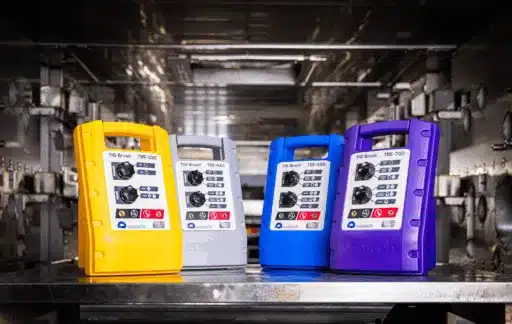
The 550 handles heavy stainless steel and tough welds, while this model is our top-tier unit with the highest output and duty cycle. Both clean and passivate, but the flagship adds full electropolishing and branding at a faster speed.
3. Does it need special training to operate?
No. It follows the same three-step process as the rest of our range: apply fluid, brush, then neutralize. Most operators feel comfortable running it within a single session.
4. Is it available in single voltage and dual voltage versions?
Yes. The TBE series runs on dual voltage from 110V to 230V for mixed infrastructure, while the TBX series suits single voltage 220V to 230V systems. Check your local power supply or ask your distributor to confirm the right fit.
5. What warranty comes with it?
Every TIG Brush weld cleaner comes with a 24-month warranty, activated through our online form or by contacting our Australian or US offices.