How Much Does a Weld Cleaner Cost in 2026? Full Breakdown by Machine Type
22 May 2026

If you are pricing a weld cleaner in 2026, you will quickly find that there is no single answer. Weld cleaner cost depends on the machine series, the type of stainless steel work you handle, the accessories you need in the kit, and how you buy.
At TIG Brush, we see this question from fabricators, welders, OEM manufacturers, and job shops every day. Most are not really asking for one number. They want to know which machine makes sense for their workload, what else they need besides the power unit, and how to avoid paying for capacity they will never use, or worse, buying too small and hitting limits too early. You can start by reviewing the full TIG Brush product range and then narrow your options based on how often you clean stainless steel welds and how demanding those welds are.
Key points
- Weld cleaner price usually increases with output, duty cycle, and overall kit capability.
- The machine is only part of the cost, fluids, brushes, cables, and spare parts matter too.
- Distributor quotes can differ based on stock, freight, bundled items, and local support.
- Australia is usually an AUD buying context, while US buyers typically quote in USD.
- The right machine is the one that matches your workload, not simply the lowest entry point.
What affects weld cleaner cost in 2026?
The biggest cost factor is machine tier. TIG Brush offers four main machine families, the 330, 440, 550, and 700, and each one is built for a different level of use. As you move up the range, you are not just paying for more power. You are paying for greater productivity, better suitability for tougher welds, and a machine that can hold up under more consistent use.
The type of welds you clean also matters. A shop handling occasional TIG welds on light stainless jobs will usually need a different setup from a manufacturer cleaning tougher welds from MIG, MAG, stick, laser, or Sub Arc processes. Heavier oxidation, longer runs, and more frequent cleaning generally push buyers toward a more capable machine and a broader accessory setup.
Then there is the kit itself. The machine is one part of the total cost, but your working setup may also include cleaning fluids, neutralising fluids, brushes, spare brush tips, leads, and accessories that make the process faster and more consistent. Buyers who only focus on the machine price often miss the real ownership picture.
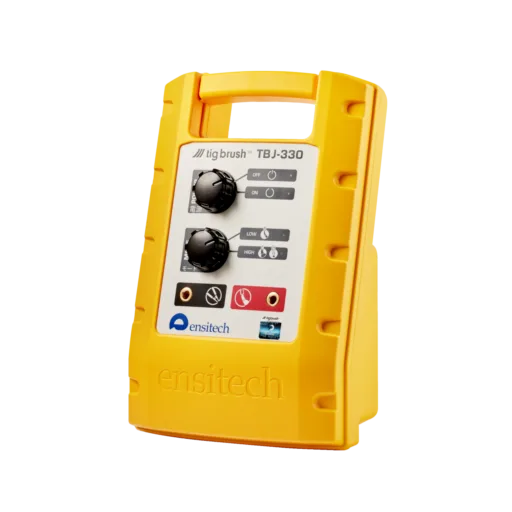
Weld cleaner price tiers by TIG Brush machine type
1. Entry tier, TIG Brush 330
The TIG Brush 330 is the entry point into the range. It suits occasional stainless steel weld cleaning, smaller workshops, and buyers who want a professional system without stepping into a heavier production machine. From a cost point of view, this is where buyers usually start when they need dependable results on a lighter workload.
The 330 makes sense when weld cleaning is important, but not constant. If your team cleans stainless welds a few times a week rather than all day, every day, this tier can keep your initial spend under control while still giving you a proper TIG Brush system.
2. Mid tier, TIG Brush 440
The 440 is a smart fit for many small to medium fabrication shops. It sits in the middle of the range and is designed for regular weld cleaning and passivation. This is often the point where buyers start balancing purchase cost against time saved on the floor.
If your team uses the machine often enough that speed and consistency affect throughput, the 440 is usually worth a close look. It gives you more room to handle day to day work without moving straight into the upper end of the range.
3. Upper mid tier, TIG Brush 550
The 550 moves into a more heavy-duty buying decision. This machine is a better match for tougher welds, higher cleaning volume, and shops that need stronger day to day performance. It sits in a higher price tier because it is built for more demanding applications.
This is often where growing workshops find the balance between budget and output. If the work is getting heavier, the oxidation is more stubborn, or the entry and mid tier machines feel too close to their limit, the 550 often becomes the sensible step.
4. Premium tier, TIG Brush 700
The 700 is the premium end of the TIG Brush range. It is built for buyers who need speed, power, and maximum day-to-day capability, with cleaning, passivation, polishing, and branding functions in one platform. It is also designed for continuous industrial use, which is why it sits at the top end of the range.
For high-output environments, the value of the 700 is not only about features. It is about keeping up with production without turning weld cleaning into a bottleneck.
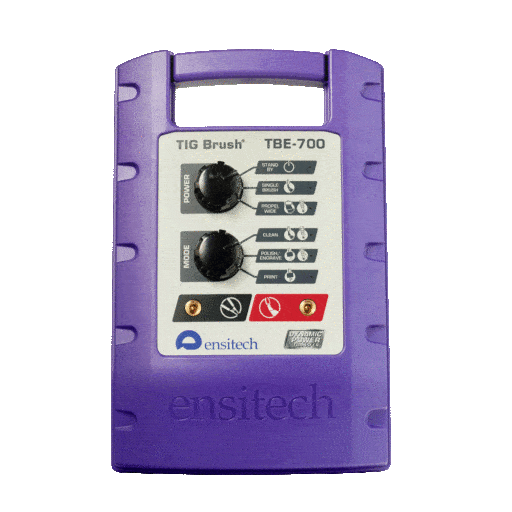
What is included in the total cost of a weld cleaning system?
A weld cleaner should always be priced as a working system, not as a box on its own. The power unit is central, but it is only one part of what you need on the job.
Fluids are a good example. Different jobs may call for different cleaning or neutralising products depending on the finish required, the site environment, and how aggressive the weld contamination is. If you clean stainless steel regularly, fluid use becomes a normal operating cost and should be planned from the start.
Accessories are the other major factor. Brushes, leads, handles, cables, and spare parts all affect usability, speed, and replacement planning. In real workshop conditions, the right accessories can make the difference between a system that fits your process and one that slows it down.
Distributor vs direct, what changes for the buyer?
This is one of the biggest reasons weld cleaner cost can vary. TIG Brush works through an authorised distributor network, and that means your final quote may reflect more than the machine itself. Local stock, freight, bundled consumables, service support, and regional advice can all affect the buying package.
That is not a bad thing. In many cases, buying through the right distributor gives you better support and a more practical setup for the work you actually do. For buyers in Australia, that usually means an AUD quote with local supply in mind. For US buyers, it generally means a USD quote through the relevant regional channel. If you are comparing options, the best next step is usually to use the TIG Brush distributor locator and request guidance based on your actual workload.
How to choose the right weld cleaner for your budget
The best way to control cost is to match the machine to your cleaning volume. If weld cleaning is occasional, start lower in the range. If it is part of your daily stainless steel workflow, buying too small can cost more over time through slower cleaning, operator frustration, and the need to upgrade sooner than expected.
A simple framework works well. The 330 suits occasional use. The 440 is a strong fit for regular workshop use. The 550 makes sense for heavier work and tougher welds. The 700 is the premium option for high-output production where speed and duty cycle matter every day.
Weld cleaner budget checklist
- Choose the 330 if you want an entry-level TIG Brush system for occasional stainless steel weld cleaning.
- Choose the 440 if you run a small to medium fabrication shop and need a machine for regular use.
- Choose the 550 if you deal with tougher welds, heavier fabrication, or a higher cleaning workload.
- Choose the 700 if you need a premium system for high-output stainless production and continuous use.
You should also check whether your quote includes the accessories, brushes, leads, and fluids needed to put the machine straight into service. That gives you a better view of true system cost, not just machine cost.
Is a weld cleaner worth the cost?
For most stainless steel fabricators, the answer comes down to output, finish quality, and process control. A properly matched weld cleaning system can help you clean and passivate in one workflow, support a more consistent finish, and reduce reliance on slower or harsher cleanup methods.
That is why experienced buyers do not focus on headline price alone. They look at the complete system, the workload it needs to support, and the long-term value of getting the right machine from the start.
FAQs
1. How much does a weld cleaner cost in 2026?
Weld cleaner cost varies by machine series, kit contents, and buying route. The most useful way to assess price is to look at the machine tier you need, then account for fluids, accessories, and local supply.
2. Why does the weld cleaner price vary so much between machines?
Different machines are built for different workloads. As you move up the range, you are generally paying for more output, stronger performance on tougher welds, and better suitability for regular or continuous use.
3. What ongoing costs should I budget for?
You should budget for fluids, neutralising products, brushes, cables, and replacement parts. These are part of normal operation and should be included in any serious buying decision.
4. Is it better to buy through a distributor or enquire directly?
For most buyers, the distributor route is the practical option because it can include local stock, support, and region-specific advice. A direct enquiry is still useful when you want help identifying the right machine before requesting a quote.
5. Which TIG Brush machine is right for a small fabrication shop?
For many small to medium shops, the 440 is a strong starting point because it suits regular use without pushing into the premium end of the range. If your welds are tougher or your cleaning volume is higher, the 550 may be the better fit.