How to Standardise Weld Cleaning Procedures Across Projects
20 May 2026
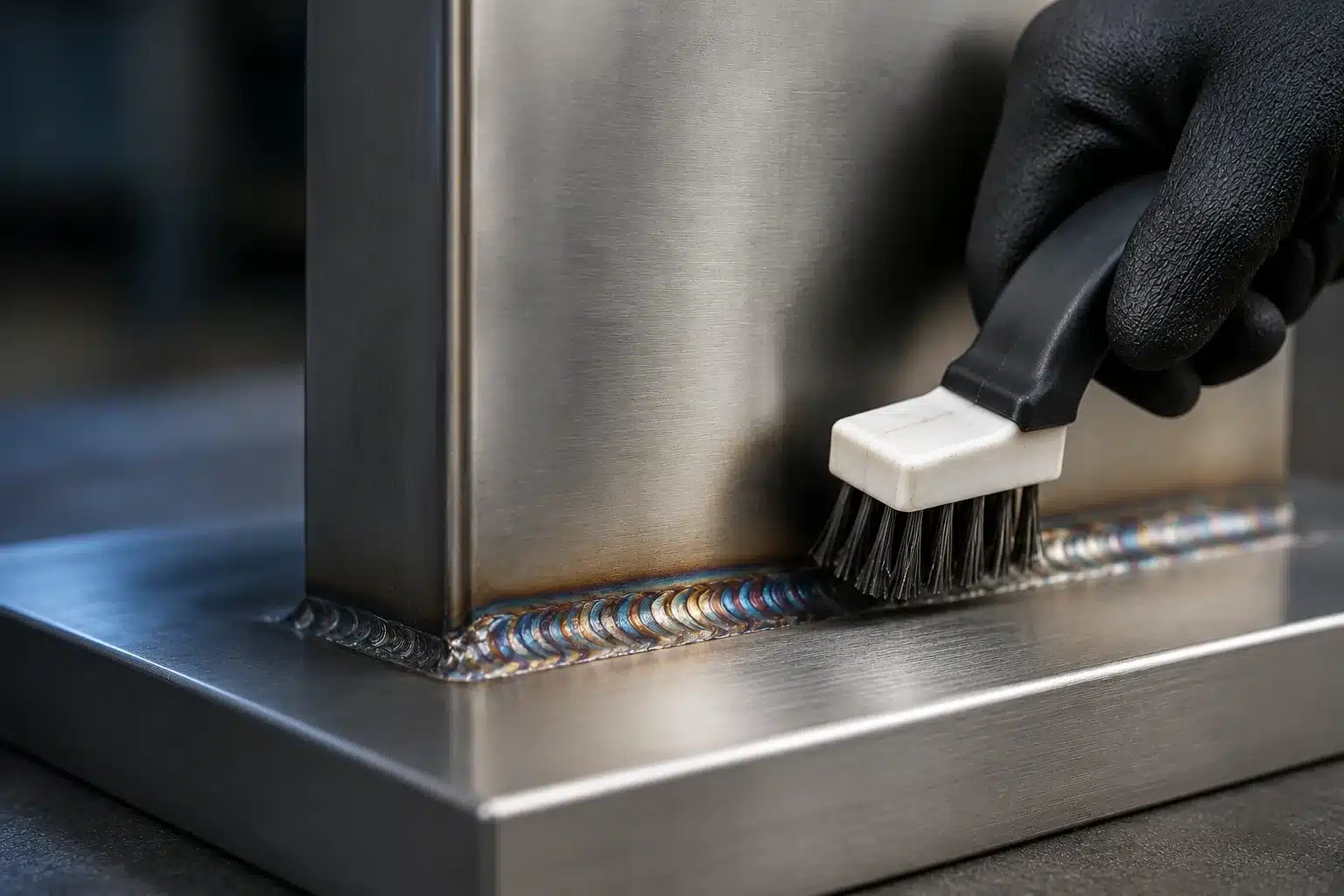
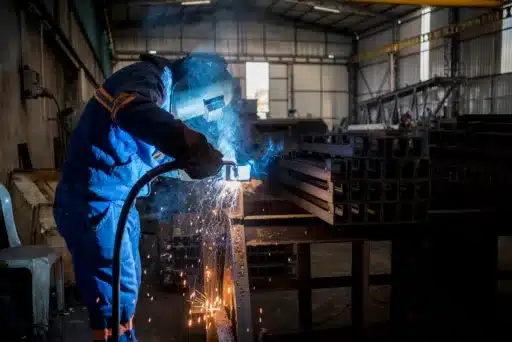
In fabrication, a clean weld is not just a cosmetic detail. It reflects the quality of the workmanship, the control of the process, and the professionalism of the business delivering the job. When stainless steel weld cleaning is handled differently from one operator, shift or site to another, results can vary quickly.
One team may achieve a bright, even finish. Another may leave shadowing, streaking, or residue. A third may overwork the surface while trying to correct heat tint. These differences slow production, create rework and make it harder to maintain a consistent standard across projects.
At TIG Brush, we know reliable weld cleaning comes from a repeatable process. With the right equipment, fluids, operator training, and quality checks, fabrication businesses can create consistent results across teams, workshops, and job sites.
Key points
- Standard weld cleaning procedures reduce variation between operators and locations.
- Consistent equipment setup improves control, speed, and finish quality.
- Operator training should focus on brush contact, fluid control and inspection.
- Neutralising and final checks are essential parts of a professional weld clean.
- TIG Brush systems support repeatable stainless steel weld cleaning across project types.
Why weld cleaning needs a standard procedure
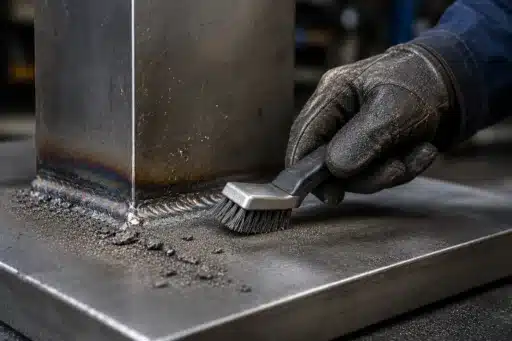
Stainless steel weld cleaning is often treated as a final task, but it should be managed as a controlled finishing process. Heat tint, oxidation and surface contamination need to be removed properly so the finished component presents well and is ready for service.
Without a clear procedure, operators rely on personal habits. That can lead to inconsistent pressure, uneven cleaning speed, incorrect fluid use or missed neutralising steps. Even small differences can show up clearly on stainless steel, especially on food and beverage equipment, marine components, architectural fabrications and high-finish assemblies.
A standard procedure gives every operator the same reference point. It defines what a clean weld should look like, how it should be achieved, and what must be checked before the part moves forward.
Create a clear weld cleaning workflow
A strong workflow removes guesswork. It should be simple enough to use on the shop floor, but detailed enough to protect quality.
A practical weld cleaning procedure should include:
- Inspection of the weld and surrounding stainless steel before cleaning
- Confirmation of material type, finish requirement and access limitations
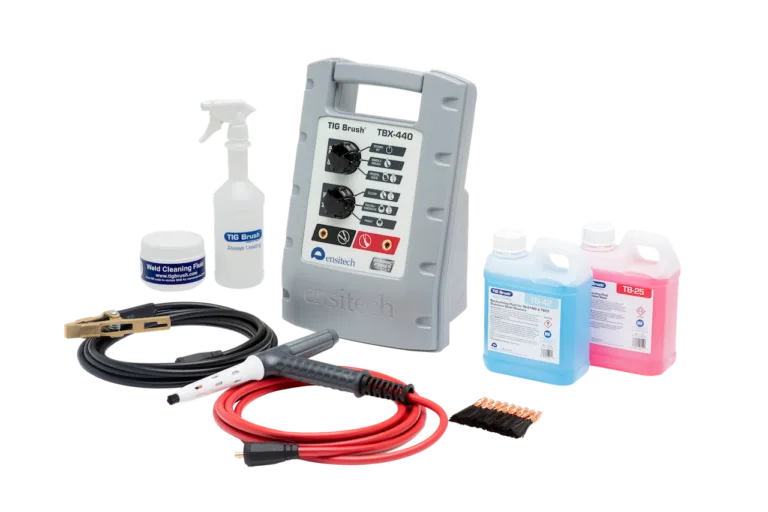
- Selection of the correct TIG Brush unit, fluid and weld cleaning brush
- Brush preparation and fluid application method
- Cleaning direction, speed, contact time and pressure guidance
- Neutralising process after cleaning
- Final inspection against an approved finish standard
This workflow should be used across workshop and site work. For multi-site businesses in Australia and the USA, it helps keep expectations aligned even when teams are working in different locations.
Standardise TIG Brush setup before work starts
Many weld cleaning issues begin before the brush touches the surface. If operators use different equipment combinations, worn brushes or inconsistent fluid application, the finish will vary.
Start by defining approved setups for your common work types. Light heat tint, heavier oxidation and visible finish work may need different levels of control. Your procedure should state which TIG Brush system, brush and fluid combination is suitable for each task.
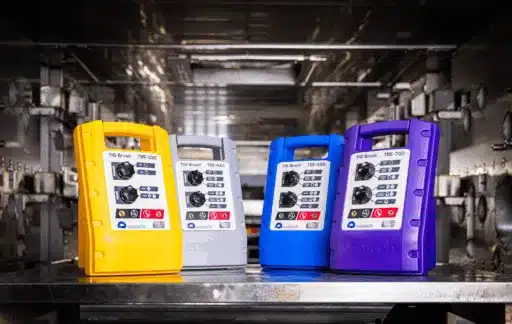
The full range of TIG Brush weld cleaning systems gives fabrication teams options for different production needs. The 330 Weld Cleaner suits lighter fabrication and mobile weld cleaning work, while the 440 Weld Cleaner supports reliable day-to-day stainless steel weld cleaning in workshop environments. For higher-demand production and industrial applications, the 550 Weld Cleaner and 700 Weld Cleaner provide additional power and performance for larger workloads.
Brush condition should also be checked before each job. A clean, correctly fitted weld cleaning brush gives more consistent contact with the stainless steel surface. A worn, contaminated, or poorly prepared brush can create patchy results and make operators compensate with extra pressure.
Fluid control is just as important. The brush should stay properly loaded during cleaning, without flooding the work area. Too little fluid can reduce cleaning efficiency and create uneven results. Too much fluid can slow the job and make the process harder to control.

Train operators on repeatable technique
Good weld cleaning technique is controlled and deliberate. It is not about pushing harder or moving faster. Training should show operators how to achieve a consistent weld clean without damaging the finish or wasting consumables.
Operators should be trained to hold the brush at a consistent working angle, maintain steady contact with the weld and heat-affected area, use light pressure, move at a controlled pace, reapply fluid before the brush dries and avoid unnecessary cleaning beyond the affected area.
Use sample welds during training. Show what a correct finish looks like, then show common defects such as streaking, dull patches, residue, missed heat tint and overcleaned areas. This builds operator judgement, which is essential when teams work across varied stainless steel components.
Make neutralising non-negotiable
A professional stainless steel weld cleaning process should not stop when the weld looks clean. Neutralising helps complete the surface treatment process and should be part of every standard operating procedure.
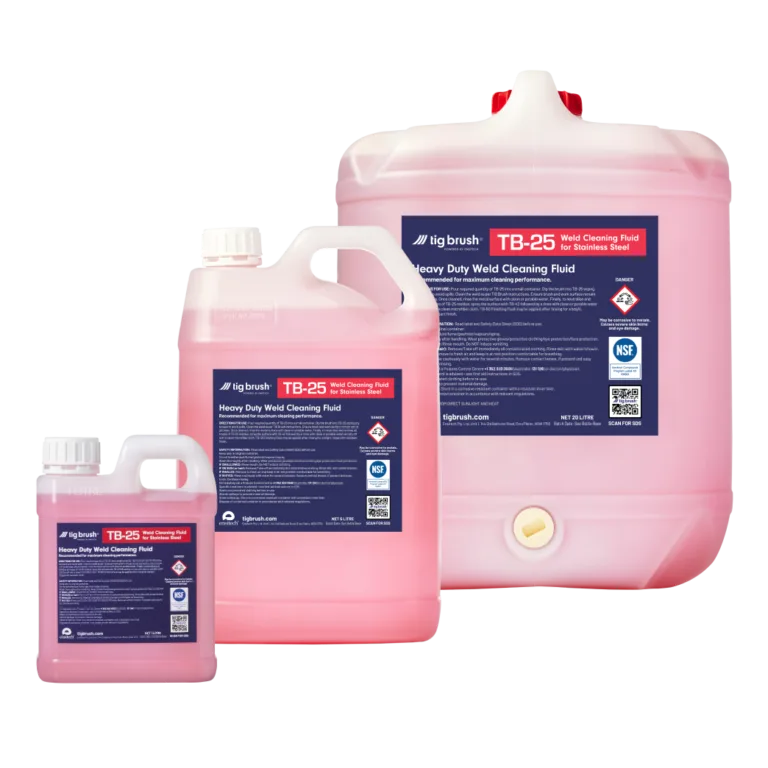
If neutralising is left to operator preference, results will vary. Some parts may be thoroughly finished, while others may carry residue into the next stage of production. TIG Brush supplies dedicated TIG Brush Fluids designed to support the cleaning and neutralising process, helping teams achieve a more consistent weld clean across stainless steel applications.
Build quality control into the process
Quality control should be visible, simple and repeatable. Create an approved finish benchmark for each type of work, using physical samples, photos or project-specific acceptance notes. Operators can then compare their work against a defined standard rather than relying only on personal judgement.
Your QC checklist should cover complete removal of visible heat tint, even finish quality, no streaking or residue, no signs of cross-contamination, neutralising completed and final inspection signed off before packing or installation.
For larger projects, record the operator, equipment used and inspection outcome. This makes it easier to identify training needs if issues appear later.
Improve efficiency without losing finish quality
Standardisation should make weld cleaning faster and more reliable. When operators know the process and have the right equipment ready, they spend less time correcting inconsistent results.
Set up cleaning stations with TIG Brush equipment, fluids, brushes, PPE, wipes and inspection tools in one place. For site work, prepare kits before the team leaves the workshop. This reduces downtime and helps mobile crews follow the same procedure used in-house.
A clean weld starts with a controlled process
The most consistent fabrication businesses do not leave weld cleaning to chance. They define the method, train the operator, standardise the setup and check the result.
With TIG Brush, stainless steel weld cleaning can become a controlled, repeatable part of your workflow. That means fewer inconsistent finishes, less rework and a more professional result across every project.
FAQ
1. What is the best way to standardise weld cleaning?
Create a written procedure that covers inspection, TIG Brush setup, fluid selection, cleaning technique, neutralising and final quality checks. Train each operator to the same method and use approved finish samples to guide inspection.
2. How can I get a cleaner weld finish on stainless steel?
Use the correct TIG Brush system, fluid and brush for the application. Keep pressure light, maintain steady brush movement, control fluid use and neutralise the surface before final inspection.
3. Why do weld cleaning results vary between operators?
Results usually vary because operators use different pressure, speed, fluid levels, brush condition or inspection standards. A shared procedure helps reduce those differences and makes the finished result more predictable.
4. How often should a weld cleaning brush be replaced?
Replace the brush when it is worn, damaged, contaminated or no longer making consistent contact with the surface. Checking brush condition before each job helps prevent patchy or inefficient cleaning.
5. Why is neutralising important after weld cleaning?
Neutralising helps complete the weld cleaning process and supports a stable stainless steel surface. It should be treated as a required step, not an optional extra.